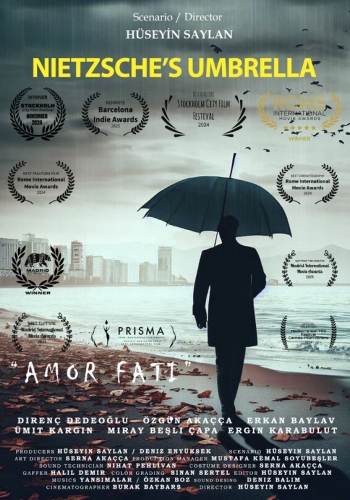
Yapım Tarihi - 2024
Süre - 01:26:11
Format - Uzun Kurmaca, Renkli, Türkçe
Yönetmen / Director - Hüseyin Saylan
Senarist / Writer - Hüseyin Saylan
Yapımcı / Producer - Hüseyin Saylan, Deniz Enyüksek
Executıve Producer - Deniz Pişkin
Edıtıng - Hüseyin Saylan, Nurhan Bilek, İbrahim Yam
Art Dırector - Serna Akaçça
1st Asısstant Dırector - Ilayda Demırel
Productıon Department - Mustafa Kemal Soyubesler
Costume Desıgn - Serna Akaçça
Gaffer - Halil Demir
Sound Technıcıan - Nihat Pehlivan
Camera Operator - Halis Kayadelen
Focus Puller - Burak Artıksüer, İsmail Eser
Camera Asısstant - Sefa Erkahraman, Ahmet Boasi, Erşah Çiçek
D.I.T. - Semra Oğuz
Sound Desıgn & Fınal Mıx - Deniz Balım
Assıstant Art Dırector - Gökhan Gököz
2nd Assıstant Dırector - Burak Arınık
3rd Assıstant Dırector - Utku Keskin
Set Crew - Erdoğan Tosun, Serkan Aydın
Lıghtenıng Crew - Muharrem Kosova, Berker Şen
Art Crew - Seyde Topaloğlu, Sinem Omay, Taylan Ünal
Color Correctıon - Colorcore Post, Sinan Sertel
Coordınatıon - Cansın Sıral
Assıstants Of Dırector - Yağız Yaşın, Zeynep Mulcar, Özgür Özçelik
Haırdresser - Murat Çağın
Make Up - Onur Erinç Akaçça
Castıng Dırector - Özgün Akaçça
Productıon Assıstant - Levent Sevsay
Boom Operator - Özkan Boz
Vfx Supervısor - Sinan Sertel
Englısh Subtıtles - Öykü Gizem Gökgül
Nıetzsche Book Desıgn - Oğuz Rize
Poster Desıgn - Creatıve Works, Oğuz Rize
Camera Equıpments - İstenci Kamera, Mtn Film
Sound Equıpments - Masterfilm Teknik
Lıghtenıng Equıpments - Domı Lıght
Musıc
Bab-I Esrar - Yansımalar
On Sekiz - Yansımalar
Nıetzsche'nin Şemsiyesi - Neyzen Özkan Boz
Haydar Haydar - Neyzen Özkan Boz
Ney Taksim - Nihilist - Neyzen Özkan Boz
Yine Bir Gülnihal - Neyzen Özkan Boz
Ana Karakter / Key Cast
Direnç Dedeoğlu, Erkan Baylav, Özgün Akaçça, Ergin Karabulut, Ümit Beste Kargın, Miray Beşli, Zafer Kırşan, Ali Safi, Marına Lebedeva, Hakan Güner, Bengisu Gergin, Ayşegül Pulathan, Hüseyin Saylan,
Cansu Uzun Saylan, Andreı Ponomarev, Sergeı Ponomarev, Toprak Köse, Ahmet Boası, Barış Öcal, Mehmet Ali Gürbüz, Utku Şahin, Doğuhan Yücel, Acun Koyuncu, Tatıana Zavıalova, Muharrem Kosova
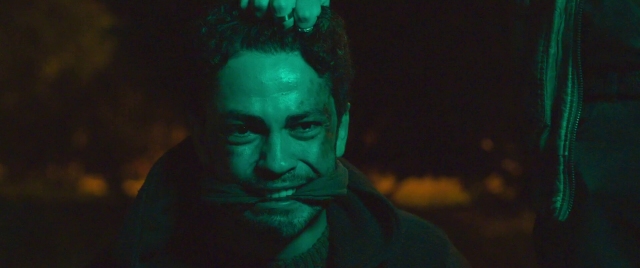
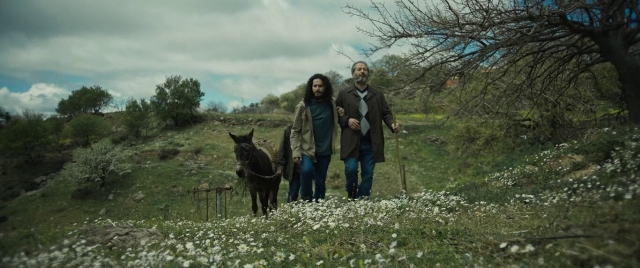
Felsefe bölümünde asistanlık yapan Burak, Nietzsche üzerine kitaplar çevirmekte, sahaflık yapan görme özürlü amcası ile ilgilenmekte, ev arkadaşı Serkan ve Moskova’daki Altuğ ile birlikte bir müzik
albümü çıkarmaya hazırlanmaktadır. Altuğ’un eşi Ece, boşanma davası açınca oğlu ile birlikte Burak’ın eski eşi Selin’in evine taşınır. Altuğ, Moskova’dan döndüğünde Burak ile birlikte Selin’in evine
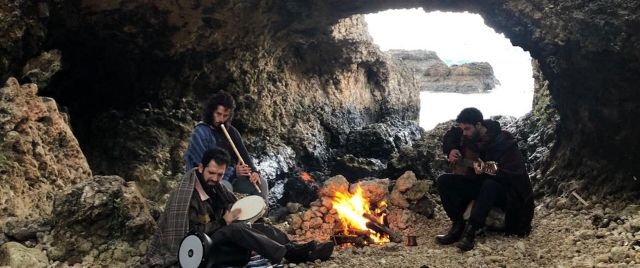
gidip gerginlik çıkartır. Ertesi gün Burak, Altuğ ve Serkan Kaz Dağları’na çadır kurmaya giderler. Burak asistanlıktan atıldığını ve İstanbul’dan ayrılmak istediğini söyleyince Altuğ ve Serkan,
Burak’a İzmir’den yeni aldıkları evin anahtarını verirler. Serkan çalan telefonunu açınca Ece ağlayarak Selin’in evinin salonundaki halıyı Altuğ’un yaktığını söyler. Eve dönünce polis memuru hakkında
şikâyet olduğunu söyleyerek Altuğ’u karakola davet eder. Burak, Selin ile yaşadığı sert tartışma sonrasında tekrar Kaz Dağları’na döner. Birkaç hafta sonra Serkan Burak’ın yanına gelerek Altuğ’un
Moskova’da fidye için kaçırıldığını söyler. Burak ve Serkan, Ece’ye yıllar içinde şirketin nasıl suça bulaştığını anlatmak zorunda kalırlar. Ece, Altuğ’un kaçırılmasından Serkan’ı sorumlu tutar.
Serkan polise gitmelerini söyler ve evden ayrılır. Burak ve Ece polise gittiklerinde hesap hareketleri incelenir. Altuğ’un Serkan ile ortak hesaplarındaki parayı haftalar önce çektiği ortaya çıkar.
Burak televizyon haberinde Altuğ ve Serkan’ın diğer üç Rus ile birlikte Moskova’da öldürüldüklerini öğrenir. Burak İstanbul’daki rutin hayatına, doktora tezine, Nietzsche çevirilerine geri döner.
Haftalar sonra Altuğ’un vasiyetini hatırlayınca kendisine alınan yeni eve gider. Final Burak’ın bu evde karşılaştığı sürpriz üzerinden yapılır. Burak’ın görme engelli sahaf amcası ve geleceğe dair
hayalleri, Nietzsche’nin pasajları, Serkan ve Altuğ ile olan geçmişi ile iç içe geçer.
Burak, who has been unable to complete his doctoral thesis on Nietzsche and his music album for years, eats air and drinks hope, just like Hamlet. As an instructor of the course Why do they pay
philosophy teachers? in the university’s philosophy department, his favourite speech is I forgot my umbrella! The meaning of the text, either closed or open, is like an umbrella standing on our heads.
It is like an umbrella that we don't use, that has never been mentioned, that can be forgotten immediately, and that can be get rid of when it doesn't rain...
What are you trying to tell? How would you summarise the film briefly?
In the film, I try to show the viewer the blurred lines between individuality, conscience and social responsibility while telling the story of translator Burak's search for a more peaceful life. When
I was designing the characters and the plot in the script, my goal was always the same - to set up ethical dilemmas and give the characters freedom of choice.
Can you explain the main character Burak's dramatic need, his point of view, his attitude and his character change throughout the film?
Dramatic need - Burak's conscious desire is to leave Istanbul in order to get out of his stuck life and to reach a more peaceful life. From the first scenes, Burak's cheerful recklessness and
callousness, trying not to care about anything, do not seem convincing to the viewer. As the scenes progress, it is seen that under the mask of trying not to take life and himself too seriously, there
is an effort to be accepted. As the events progress, Burak's basic contradiction is revealed. On the one hand, he desires a peaceful and worry-free life. On the other hand, he mercilessly criticises
this search for peace ‘The search for a peaceful and worry-free life is the incapacity of mediocre and tired Nietzsche translators who cannot create a satisfying meaning in their lives!’ Burak's main
dramatic need is parallel to Nietzsche's philosophy. Peace, not happiness. It is only towards the middle of the film that the viewer can grasp this motivation in the depths of Burak's nihilistic
personality.
Point of view - ‘If the world were light, there would be no art,’ writes Albert Camus in a very clear style. It is no coincidence that Burak, who wrote a doctoral thesis on Nietzsche and translated
books about Nietzsche, was a nihilist with a dark personality. This dark personality of Burak has two important characteristics. The passive side of his personality - the person who cannot get out of
the emptiness created by being detached from society, who no longer wants or does anything. In other words, a tired person. The active side of his personality - the person who rejects everything but
tries to find his own value judgements instead of the things he rejects... The struggle between these two points of view is felt throughout the film.
Attitude - Ballerina Twyla Tharp, who thinks that art is an escape, writes - ‘Art is the only way to escape from home without leaving home.’ Throughout the film, Burak's general attitude towards life
is to avoid conflicts as much as possible, to retreat into his own shell instead of struggling with problems, and to reduce the tensions he experiences by dealing with music. For Burak, music, which
makes life more bearable, has a healing effect. This general attitude of Burak is constantly criticised throughout the film. Selin interprets Burak's passivity and his effort to stay away from
negative energy and stress as a deficiency in their marriage - ‘We divorced because of your loser behaviour!’ Serkan, on the other hand, emphasises at the end of the second act that Burak cannot
escape from his responsibilities forever - ‘Even if you run away, even if you deny it, we started this together!’
What are the main idea and the message of the film?
It is not easy to escape from your past and responsibilities. The film connects with this idea at the end of the third act - no matter how hard you try, it is useless! Your past keeps following you
and at some point you have to face your past, your worst enemy. A pagan maxim says ‘You must co-operate with your enemy before it is too late’. At the end of the film, Burak's effort to reconcile with
himself and his past is depicted.
What can you say about the general atmosphere of the film?
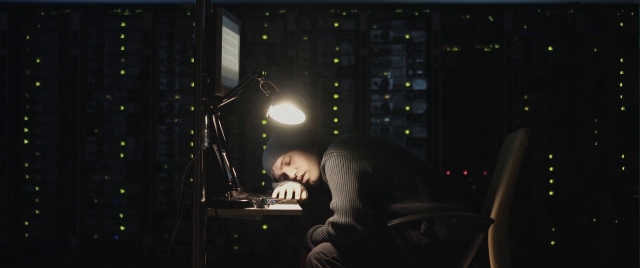
I designed the physical atmosphere of the film with Orhan Pamuk's novel The Museum of Innocence in mind. An old TV repair shop, Kasparov vs Deep Blue, Pentium 3 processors, a dusty doctoral thesis, an
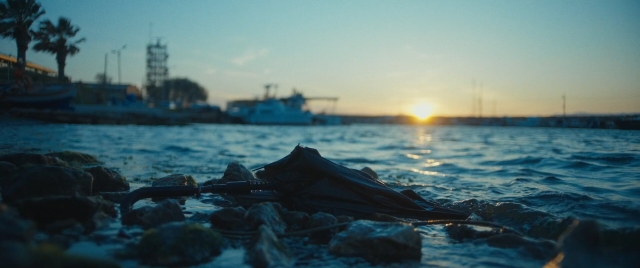
old forger shop, decaying boats... All these places and objects tell the metaphor of ‘tracing lost time’.
The film is narrated through the eyes of the main character Burak. The fact that Burak, a passive character, is sometimes left out of the developing events stands out as a deficiency in the script.
Robert McKee describes the passive main character as in conflict with some aspects of his own nature, pursuing his desire internally while being passive towards the outside. Burak's avoidance of
discussions as much as possible and his attempt to get away from Istanbul is not only an escape but also a conscious choice. Therefore, I do not see this passive main character as a deficiency in my
script, but as an attitude that complements my main character. Just like joyful recklessness, the character's conscious passivity is a defence mechanism.
What I see as a deficiency in the film is a different subject than the passive main character. Since the audience watches the film from Burak's point of view, they have to struggle with questions that
they will never learn the answers to. I had to make a choice. Yes, I could have included Burak directly in the crime story of Serkan and Altuğ to make the script more holistic and satisfying. The
audience could have watched a more satisfying film by finding answers to all their questions. But my priority was to tell Burak's story rather than wasting time with those details. I had to build such
a structure that the crime story I told and Burak's inability to hold on in Istanbul should have made the reader ask the questions I wanted to create in the last ten minutes of the film. What were
these questions?
* Does Burak have to return to Istanbul? How would he choose between his responsibility towards his uncle, Serkan and Altuğ and his own individuality? The blurred boundaries between individuality and
conscientious responsibility...
* Is it a selfish behaviour for Altuğ to withdraw the money from their joint account without Serkan's knowledge and to want to secure his son's future because he predicted what Serkan would do?
* Conscientious obligation to your friends or social responsibility? Which one is more important?
What are the events that prepare the main character's first and second character turning points?
The film begins by depicting Burak's stuckness in Istanbul and the failures he suffers. The advertising agency he founded because he didn't like his job as an editor in newspapers and magazines goes
bankrupt in four months, he can't get the money for the book he translated from the publishing house, he can't get his doctoral thesis accepted by the jury members, the mouldy smelling basement he
lives in and most importantly, he has to take care of his uncle who is a blind bookseller... The first character turning point occurs during the conversation with Altuğ. For the first time Burak
reveals his will to start a new life. Although he has not yet finalised his decision to leave Istanbul, his will becomes decisive for the rest of the film.
The plot of the film also supports the realisation of Burak's will stated at the first character turning point. In the tension that starts with the divorce process of Altuğ and Ece, Ece moves to the
house of Burak's ex-wife Selin. When Altuğ burns the carpet in Selin's house by making it look like a burglary to intimidate her, Selin accuses her ex-husband Burak of passivity and uselessness in
life. Although Burak tries to stay away from tension and negative energies, he cannot do it in Istanbul. Therefore, both Ece and Altuğ's divorce process and the tension with his uncle serve the same
purpose. The first character's turning point - Burak's ability to realise his will to leave Istanbul and start a new life. At this point, Burak cannot leave Istanbul because of the responsibility of
taking care of his uncle, who hangs over him like the sword of Damocles.
After Serkan informs him that Altuğ has been kidnapped for ransom, Burak is forced to confront his past. This is the second character turning point. After the biggest trauma he has experienced in his
life, he cannot get rid of his guilty conscience. The ‘mask of cheerful recklessness, irresponsibility, the pure joy of simple living’ that he tried to use in the first two acts of the film no longer
works and he surrenders to a melancholic inertia. When he finds the strength to find a way out again, he drifts towards the surprise ending of the film.
What you want to add about the character Burak?
One of Burak's most prominent character traits is that throughout the film, just like Hamlet, he is constantly in contradictions and indecision. On the one hand, he claims that he has no
responsibility towards anyone in life, including his uncle, and on the other hand, he is under a terrible responsibility as of the end of the second act. On the one hand, he does not take seriously
the fact that his translations of philosophy have sold a hundred copies, but on the other hand he blames society for the lack of interest in philosophy and philosophy departments. On the one hand, he
says that he cannot finish his doctoral thesis and does not want to become an academician, but on the other hand he is proud of his identity as a philosopher. On the one hand, he tries to stay away
from tension and negative energies, but on the other hand, he constantly invites bigger problems because he cannot break away from Serkan and Altuğ. On the one hand, he believes that he is lazy and
untalented in music, but on the other hand, he has been trying to release his album for three years. On the one hand, he says that he enjoys simple life and modesty, but on the other hand, he dreams
of bringing his music to other people. On the one hand, he wears a mask of cheerful recklessness, but on the other hand, he struggles with the feeling of stuckness that accumulates drop by drop. Most
importantly, on the one hand, he desires a peaceful and worry-free life, and on the other hand, he criticises this search for peace mercilessly.