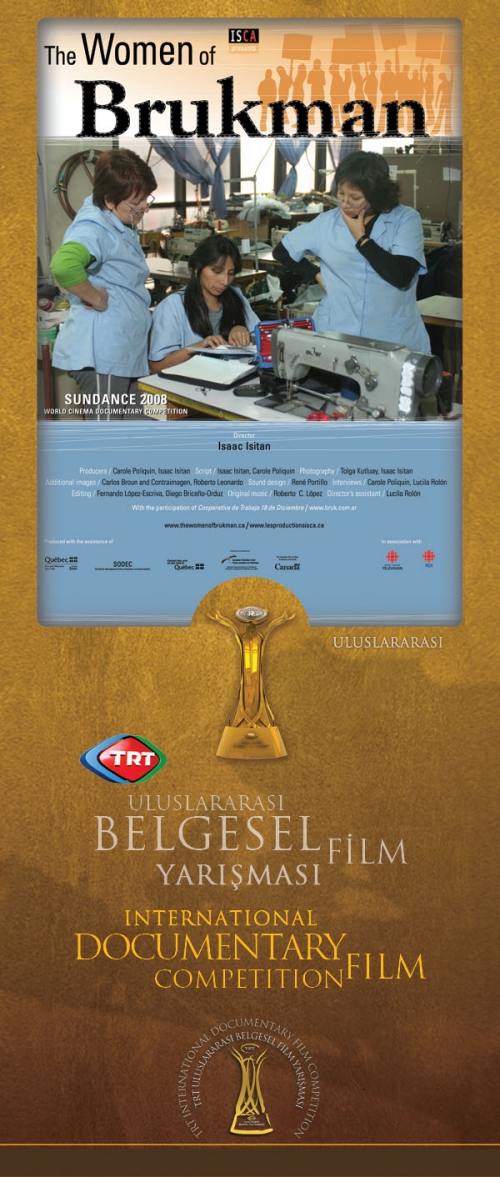
Yapım Tarihi - 2009
Süre - 01:05:00
Format - Uzun Belgesel, Renkli, İngilizce, Kanada, Pal VHS, MiniDV, NTSC VHS, MiniDV
İletişim - isca @ lesproductionsisca.ca
The Team
Credits
Réalisation (Yönetmen) - Isaac Isitan
Scénario - Isaac Isitan, Carole Poliquin
Recherche - Isaac Isitan
Entrevues - Carole Poliquin, Isaac Isitan, Lucila Rolón
Direction de la photographie - Tolga Kutluay, Isaac Isitan
Images additionnelles - Carlos Asseph, Roberto Leonardo, Grupo Alevio
Son - Isaac Isitan, Günes-Hélène Isitan
Montage - Fernando López-Escriva, Diego Briceño-Orduz
Musique - Roberto C. López
Assistance à la réalisation - Lucila Rolón
Direction de production - Günes-Hélène Isitan, Lucila Rolón (Argentine)
Secrétaire de production - Günes-Hélène Isitan
Photographe de plateau - Günes-Hélène Isitan
Assistantes à la post-production - Mathilde Jacob, Mélina Morin, Véronique
Chaput, Jimmy Medellin
Assistantes au montage - Alejandra Manrique, Sophie Farkas-Bolla
Traductions / transcriptions :
Anaïs Huerta, Claire Denzel, Emerson Xavier Da Silva, Eva Labarias, Geneviève
Lapierre, Jean-Martin Breault, Karine Rosso, Lucia Paolinelli, Lucrecia Ochoa,
Marie-Pierre Grenier, Mathilde Jacob, Maude Prud’homme, Maxime Bédard, Sarah
Charland-Faucher, Valérie Fleurant, Véronique Cloutier
Numérisation - Isaac Isitan
Montage sonore - René Portillo, Benoît Dame
Post-production vidéo - Vision Globale
Conformation - Élizabeth Duchesne
Montage en ligne - Éric Losier
Assistant monteur - Mathieu Boulanger
Coloriste - Patrice Fortin
Conseiller technique - Pierre Richard
Directeur aux ventes - Christophe David
Coordonatrice - Isabelle Nadeau
Post-production audio :
Mix audio - Jean-Pierre Bissonnette, Sylvain Brossard
Directeur de plateau - Michel J. Godin, Marie-André Corneille
Voix hors-champs :
Sophie Clément, Danielle Panneton, Michelle Lidvac, Marc Bellier, Thiery Dubé,
Marcella Pizzaro
Images d'archive :
Avec l'aimable autorisation de Klein Lewis Productions / FTE Productions et
Telefe (Canal 11)
Version française - Eva Labarias, Carole Poliquin
Préparation des sous-titres :
Stephanie Trott, Alejandra Manrique, Ricardo Astudillo, Marie Maquaire,
Catherine Legault
Remerciements spéciaux - Valérie Fleurent, Walter Laupichler, Roberto Nieto et
Christophe David
Site internet de la coopérative - www.bruk.com.ar
Produit en collaboration avec :
Radio-Canada
Premier directeur, Affaires publiques, SRC
Jean Pelletier
RDI
Directeur, grille et développement, RDI
Robert Nadeau
Producteurs exécutifs - Isaac Isitan, Carole Poliquin
With the participation of
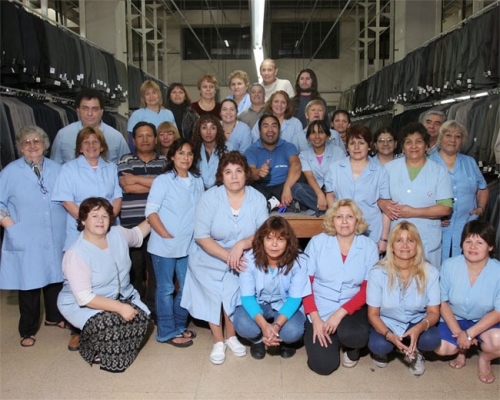
the workers of the Brukman factory
Celia Martinez
Matilde Josefina Adorno
Delicia Regini
Juan Carlos Regini
Liliana Torales
Nilda Bustamente
Adolfina Perez
Alba Sotelo
Alfredo Uriarte
Amalia Arevalo
Carina Otazo
Delia Escarmiati
Edelmira Duran
Elena Caliba
Elisa Diaz
Elsa Sacaba
Elvira Bustos
Elvira Ocampo
Esalta Flores
Estela Cardenas
Ester Valdez
Florecia Maestro
Glady Figueroa
Gladys Guerrero
Gustavo Palamarchu
Hugo Gimenez
Irene De La Vega
Juana Chinque
Leonor Olivares
Liliana Cardenas
Macario Avelo
Mario Chazarreta
Mario Marin
Marta Varela
Messina Maria Del Carmen
Miguel Rodas
Nilda Villa
Olimpia Loza
Oscar Gimenez
Patricia Ocampo
Raquel Lopez
Rosa Corpos
Rosa Escarmiati
Santiago Holc
Sergio Cardenas
Susana Luna
Walter Gareca
Wilfredo Yarbi
Yuri Fenandez
Zenon Gimenez
and Me Luis Caro
Produced with the financial participation of Sodec
SODEC
Société de développement des entreprises culturelles-Québec
Crédit d'impôt pour production cinématographique ou magnétoscopique canadienne
Synopsis
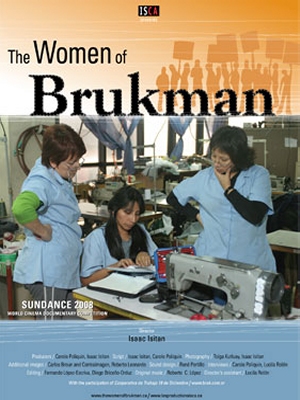
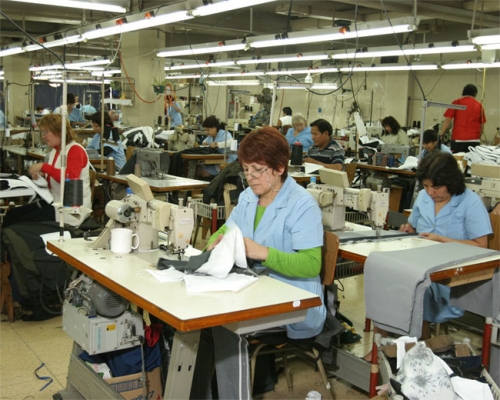
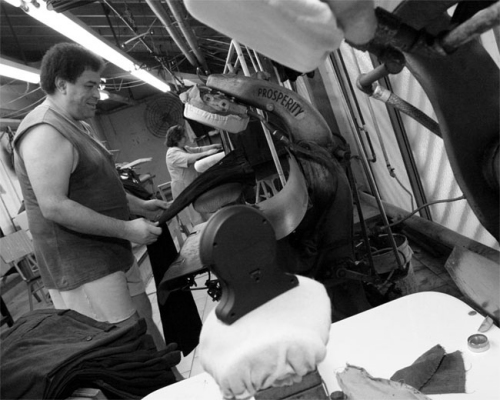
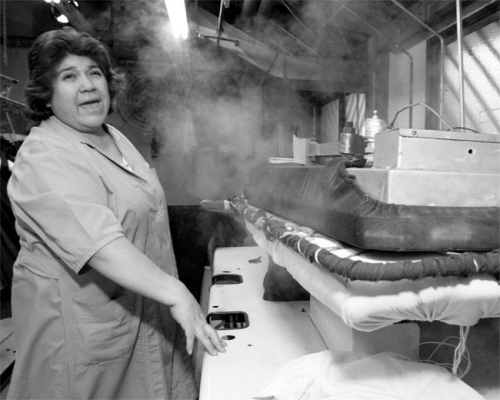
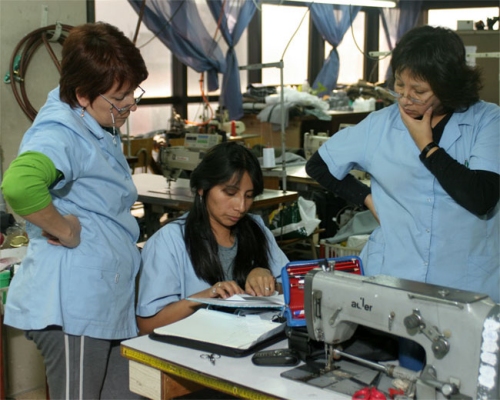
During the 2001 economic collapse in Argentina, the seamstresses at Brukman’s
clothing factory took over the operation the owners had abandoned. They
reorganized it on a self-management model, without a doubt the most inspiring of
the many new economic experiments in that country.
The name Brukman’s went from being a symbol of worker exploitation to being a
site of revolutionary labour participation - all workers, no bosses.
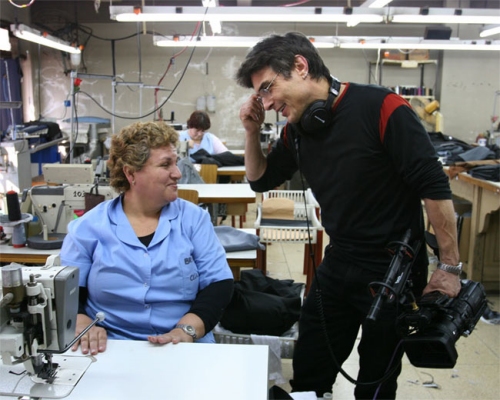
Isaac Isitan followed these courageous women over many years, their struggle to
get the operation running again, their expulsion from the factory, months of
battling to get it back, and tangles with the law.
This is the story of a venture that began as a means of survival and became a
genuine school for civics. Besides following the labour politics, the film also
gets close to the women as individuals finding a way to put dignity into their
working lives.
A few words from the Director
I’ve been directing documentaries for over 30 years but with each new project, I
feel like a student - I restart my training, I discover new human relationships.
My greatest influence remains my natal village in Turkey. The values that were
passed on to me continue to guide me and inspire my work.
I was born and raised on a farm. The first time I saw money was when I was about
8 or 9 years old. My village was self-sufficient. The peasants traded their
harvests and a natural mutual support bonded the members of the community. My
memory is marked by this way of life and my view of our modern world remains
affected by that aim for autonomy on all levels.
When I returned to Turkey in 2001 to shoot my film l’Argent (Money), things had
greatly changed. Turkey, who had been one of the seven self-sufficient countries
of the world could now only, after nineteen structural adjustment plans imposed
by the IMF (quotas, American wheat dumping, European sugar dumping, factory
closures in the food processing sectors and the unemployment that followed, etc.),
properly nourish 40% of its population. Can that be called progress?
In Money, I retraced not only Turkey’s but also Argentina’s journey, two rich
countries that sank due to a major economical crisis because of their debt and
where, at least in the case of Argentina, the citizens found an innovative way
to overcome the crisis and reinvent the local economy; comprising up to 40 % of
Argentina’s monetary mass during the economic crisis.
During my stay in Argentina, I was exhilarated to see millions of people coming
together to demonstrate in the streets of Buenos Aires to the rhythm of spoons
hitting empty pots. Right before my very eyes, I witnessed a change in power
structure- neighbourhood and inter-neighbourhood assemblies replaced corrupt and
fallen governments. My heart beat with that of every Argentinean citizen’s when
I saw their solidarity overthrow four presidents in one month. When governments
lose their legitimacy, mutiny becomes necessary. Argentineans exercised that
right by reinventing their local economy and by occupying abandoned factories.
As did the Brukman women.
I had heard of the Brukman women before my departure. Seamstresses in a men’s
suits factory that had just (in December 2001) overtaken their factory after the
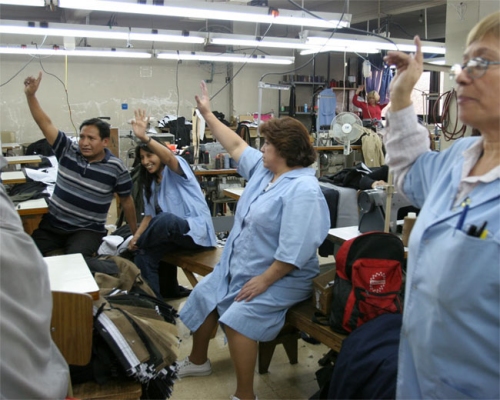
bosses disappeared without leaving a forwarding address. The women reorganized
the factory’s structure using the worker-management model, making all decisions
in assemblies and giving themselves each the same salaries.
Two months after the Brukman occupation, the « workers without employers » had
already become icons of a democratic Argentina. With the support of their
neighbours, gathered in neighbourhood assemblies, the women withstood a first
attempted eviction and a committee of watchmen was set up to protect them.
I filmed these first hours, euphoric, thanks to the enthusiasm and overwhelming
public support, and at the same time harrowing. The employers, once the worst of
the crisis was over, had decided to sue the workers for usurpation and this
despite the charges of fraud pending against them.
When I returned to Canada to finish editing Money, I was able to count on the
collaboration of some on-site people- Carlos Broun and our friends at
Contrainagen as well as Roberto Leonardo, to capture the key moments in the
story of these brave women who fought, not only legally but also on the streets,
to keep their source of income and find dignity in the workplace.
Then I returned in 2005, after a legal victory that had granted them ownership
of the machines (but not of the building), and I lived with the women for two
and a half months, witnessing the daily worker-management structure. I saw how
this experience had changed them, how their varied talents flourished in the
formation of this business and also how their political ideas had evolved. For
these women, whom nothing had prepared for such a destiny, life would never be
the same.
And now?
After exploring the initiatives for economical self-sufficiency in Money, and
worker-management with The Women of Brukman, I’m filming another documentary on
self-sufficiency in my home of Quebec. Currently, I’m focusing on a small
visionary town that succeeded putting the breaks on rural exodus thanks to its
creativity. Its villagers bypassed fashionable resolutions (fiscal vacations to
attract businesses, etc.) to bet on their collective intelligence and solidarity
and become a self-sufficient community.
When I see individual and worldwide savvy, how Can I not continue to be an
enthusiast? If only I could keep shooting for another lifetime to witness that
another world is possible (…the one that existed not so long ago in my hometown)!