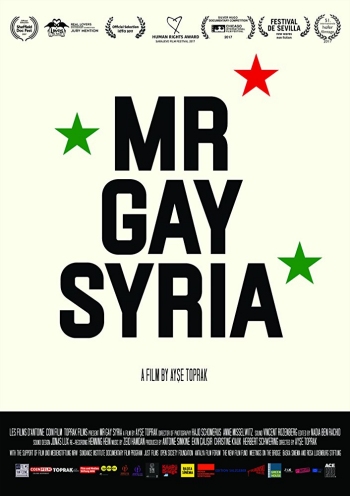
Mr. Gay SyriaSüre - 01:25:00 Format - Uzun Belgesel, Renkli, Türkçe Yönetmen - Ayşe Toprak Senaryo - Ayşe Toprak Yapımcı - Antoine Simkine, Christine Kiauk, Ekin Çalışır Mahmut ve Hüseyin savaşın ülkelerinden, eşcinsel kimliklerinin ise yaşadıkları toplumlardan kopardığı iki Suriyeli mülteci. Mr Gay Syria, onları bir araya getiren hayalin ve görünür olma mücadelelerinin hikâyesini anlatıyor. Mr. Gay Syria follows two gay Syrian refugees who are trying to rebuild their lives. Husein is a barber in Istanbul, living a double life between his conservative family and his gay identity. Mahmoud is the founder of Syria's LGBTI movement and is a refugee in Berlin. What brings them together is a dream: to participate in an international beauty contest as an escape from their trapped lives and an answer to their invisibility. Will the dream come true or will the refugee crisis and the harsh consequences of being gay in the Muslim world shatter it to pieces? Tirana Film Festival, TIFF 2017, Best European Documentary Award. 2017 54. Ulusal Yarışma, Sinema Yazarları Derneği (Siyad) Ödülü. 2017 4. Seattle Türk Film Festivali, Gösterim Seçkisi. 2017 Festival de Sevilla, Premio Ocana a la Libertad. 2017 Amsterdam IDFA, Screening. 2017 Pink Screens Film Festival, Screening. 2017 Slobodna Zona / Free Zone Film Festival!, Serbia, Screening. 2017 

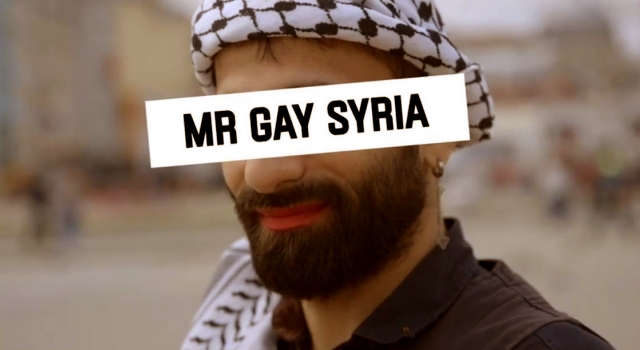
MR GAY SYRIA: SURIYELI VE EŞCINSEL BIR MÜLTECI OLMAK Mahmut ve Hüseyin savaşın ülkelerinden, eşcinsel kimliklerinin ise yaşadıkları toplumlardan kopardığı iki Suriyeli mülteci. Mr Gay Syria, onları bir araya getiren hayalin ve görünür olma mücadelelerinin hikâyesini anlatıyor. Büyük bölümü İstanbul'da çekilen belgeselin uluslararası prömiyeri, dünyanın en önemli belgesel festivallerinden biri olan İngiltere'deki Sheffield Festivali'nde yapıldı. Belgesel, İtalya, Torino'daki Lovers Film Festival'de de özel jüri ödülünü kazandı. Yönetmen Ayşe Toprak, "mücadele ve umudun" belgeseli olan Mr Gay Syria'nın hikâyesini BBC Türkçe'ye anlattı. Haber Aylin Yazan BBC TÜRKÇE 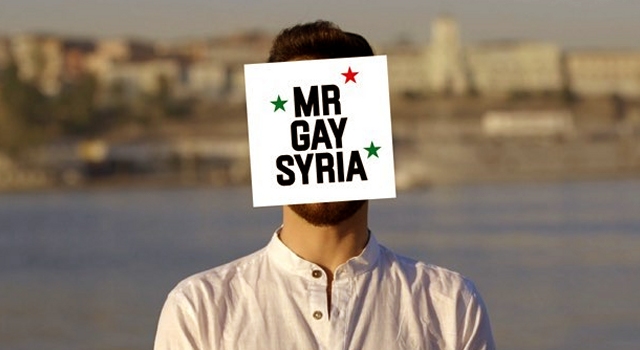
'Mr Gay Syria': film documents lives of LGBTI Syrian refugees When "Mr Gay Syria" premiered at the Sheffield Film Festival in England this June, it took viewers by surprise. For starters, the documentary revolves around a little-spoken of community: gay Syrian refugees. Turkish director and journalist Ayse Toprak chronicles the lives of Hussein Sabat and Mahmoud Hassino, as an usual quest brings them together. Married with a child, 24-year-old Sabat lives in Istanbul where, unlike Syria, homosexuality isn't outlawed -- the UNHCR estimates 1,900 LGBTI refugees are harbored in Turkey -- but the community is still vulnerable. Ayse Toprak Ayse Toprak Credit: Ayse Toprak Hassino, meanwhile, is a Syrian refugee and LGBTI activist living in Berlin on a mission to send the first Mr Gay Syria to Mr Gay World 2016, to raise awareness of LGBTI issues in Syria. Sabat applies for the job. But confronting LGBTI issues isn't the only way that "Mr Gay Syria" surprises. Instead of focusing solely on the hardships facing Syrian refugees, the film sheds light on a close-knit community of displaced friends who find laughter and levity in the midst of crisis. CNN spoke to Toprak about why she made the film, and the challenges doing so presented. How would you describe the premise of Mr Gay Syria? The Mr Gay Syria and Mr Gay World pageants were really used as a narrative thread to talk about these (LGBTI) issues and the lives of these characters. There are stories about the refugee crisis, the war, there's a love story, stories of coming out, family problems -- it's a story of strength and of a community, of people who want to hold on to life. It's all of these things, kind of woven together. Mahmoud Hassino, the organizer of Mr Gay Syria. Mahmoud Hassino, the organizer of Mr Gay Syria. Credit: Ayse Toprak How did the idea for the documentary come about? It was inspired by one of the main characters, Mahmoud, who I met while working at Al Jazeera. I was assigned to do a story on the school system for Syrian refugees in Turkey. I don't speak Arabic, so I worked with a fixer. Mahmoud was one of the fixers I interviewed. One of the first things he said was: "I'm gay. And if you're not okay with that, then don't work with me." I learned later that he is a big LGBTI activist in Syria -- and he had this dream to take LGBTI Syrian men to an international contest called Mr Gay World. Why Mr Gay World? Mahmoud thought it would be the ultimate way of defying everything that he has lived through and raising awareness about LGBTI issues. Everyone was really tied up with the Syrian conflict. He knew that unless he did something outrageous, like taking the first Syrian to Mr Gay World, no one would listen to his cause. A Mr Gay Syria applicant preparing breakfast before the contest. A Mr Gay Syria applicant preparing breakfast before the contest. How do you think LGBTI issues relate to the Syrian crisis? A lot of people feel that we shouldn't be talking about LGBTI in the Arab world, or in relation to the Syrian crisis, because it's too niche. But I think it shows that we can fight for specific rights in the name of larger conflicts. Just because they're gay doesn't mean they aren't refugees -- they all share a common destiny with millions of Syrian refugees, dealing with conflict beyond their control and finding new homes where they can feel like they belong. In terms of the refugee crisis, we are showing a community that has never been explored before, and perhaps that's because LGBTI issues seem like less of a crisis, or a smaller scale, than the overall Syria situation. But you can't value one human right over another. Tell me about Hussein, one of the main characters. Hussein is a barber living in Istanbul. He's young, in his early 20s, and living a double life between his very conservative family on the outskirts of Istanbul and his gay life in the middle of the city. What he's going through as a gay man -- married to a woman, living in a conservative world, and what that woman is going through as well -- is so common in the Arab world. We received so many messages about him (from viewers), saying that they were living the same life. A man prepares to audition to be Mr Gay Syria. A man prepares to audition to be Mr Gay Syria. Credit: Ayse Toprak How does his character evolve during the film? He applies for Mr Gay Syria and, in his interview, the (judges) ask him: "Is it out of courage or despair that you're attending this contest?" And he responds: "Despair, turned into courage." Those words were really powerful. He's the kind of person who wants to evolve, move forward and change things -- not just for himself, but also for his family as well. His story is very tragic, actually, but he never loses that hope, which I think is important. Spoiler alert! Hussein ends up winning the Mr Gay Syria pageant. What drew him to this competition? It's not really a beauty pageant. It's more of a small community -- about 50 or 60 people (in Turkey). These guys love laughing, they love life, and love having fun even though they are surrounded by so much tragedy. Half of them are sex workers, they have family stuck in Syria, they live in a terrible time -- probably as bad as it gets. But regardless, they want to laugh and have fun. And Mr Gay Syria gave that to them. They could come back to life. You can see how much they want to live -- it's beautiful, and offers an escape. In the end, Hussein couldn't partake in Mr Gay World. What happened? It's extremely difficult for Syrians to get passports or visas right now. It's a complete black market. That's what I witnessed -- they would have had to bribe people, or buy a fake passport through a middleman. In the end, Hussein couldn't get a visa to go to Malta, where the competition was taking place. What are the challenges of making a film like this in Turkey? We know our way around Turkey, so filming isn't so hard, but we didn't advertise to the police that we are filming a gay story. If we were asked, we changed the name of the film to something like "A Good Life," and said it was about something else. We tried to stay under the radar. I don't know what would have happened if we told them it was a gay film. I thought it was possible we could lose our filming permit, but I have no idea. Maybe nothing would have happened -- but I just didn't want to risk it. Police at the Istanbul gay parade in 2016. Police at the Istanbul gay parade in 2016. Credit: Ayse Toprak What's the situation like for the LGBTI community in Syria and Turkey? I am not an expert on Syria in terms of numbers, but there are lots of hate crimes where people are beaten up or thrown into jail. They're facing extremist groups, they're hated by the regime, and they really have no space to breath. In Turkey, the LGBTI community has NGOs and support groups that are working for their lives, but of course hate crimes are still a problem. They constantly experience harassment and abuse, because conservative views are becoming more predominant. The gay pride parade, for example, used to have more than 100,000 people join, from all walks of life. But in the last few years it was banned by the government, or shut down with tear gas and rubber bullets. Turkey is freer than our neighboring countries when it comes to LGBTI -- in that it's not criminalized -- but there are still a lot of problems that need to be resolved. How does this film break from the normal narrative about Syrian refugees? Syrians aren't always crying and miserable. They also love to laugh and want to live. They might be living in terrible conditions, but laughter is a way to survive. That's why Mr Gay Syria is such a powerful community. Syrians aren't always crying and miserable. They also love to laugh and want to live ... laughter is a way to survive. Ayse Toprak, film director When we showed the film at Sheffield Film Festival, one of the audience members was a Syrian girl. She raised her hand and said: "Thank you for making this film -- it's refreshing that I can cry, but I can also laugh at the same time. Because everything I usually see is about the victimization of Syrians." So, perhaps, a lot of the other documentaries coming out of region about Syria is all doom and gloom. We haven't yet seen many documentaries that have really powerful characters, in terms of people holding onto life, having a laugh with it, and who express their hopes and dreams. They're not victims in this story, they're very strong. How did this film change your concept of the word "refugee"? The closer I got to these people, the more I realized that we have this concept of refugees -- that they are helpless or powerless. What surprised me is that there was much to learn about life through them. I saw the beauty of their community and that they have so much strength, which I hadn't realized before. They're very vulnerable, but they have so much dignity, and that's unbelievably beautiful. As we got close to these characters, I thought that if I could transmit them onto the screen, that the audience could see them as I did, and feel moved. I don't think the film is going to change policies or anything, but if it gives people a different perspective then that's a success to me. What effect do you want the film to have? One of the first things that a friend of mine said after watching the film, was that she wished that something good would happen in the lives of these characters. She hoped that they would find their dream homes, find somewhere they belong, and live the way they wish. My hope is that everyone who watches the film has a similar reaction. This interview has been edited for grammar and brevity. http://edition.cnn.com Written by By Kate Springer, CNN 29th June 2017 |