Yapım Tarihi - 2022
Süre - 01:14:00
Format - Uzun Belgesel, Renkli, Türkçe
Yönetmen - Ahmet Tolga Ayıklar
Senaryo - Ahmet Tolga Ayıklar
Yapımcı - Ahmet Tolga Ayıklar
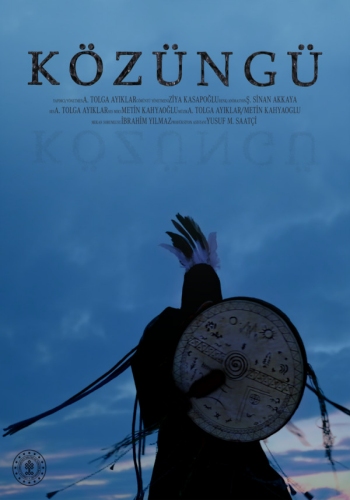
Közüngü, avcı-toplayıcı Türk topluluklarının anonim bilgeleri, mucitleri,
imalatçıları, sanatçıları ve zanaatkârları olan kamların ritüel kıyafetlerinin
göğüs bölgelerine taktıkları aynalara verilen isimdir.Belgesel, Orta Asya Türk
kültürünün Anadolu kültürüne yansımalarını araştırıyor.Belgesel, Orta Asya Türk
kültürünün Anadolu kültürüne yansımalarını araştırıyor.
Közüngü is the name given to the mirrors worn on the chest areas of their ritual
costumes by kam, who were the anonymous sages, inventors, manufacturers, artists
and craftsmen of the hunter-gatherer Turkish communities. The documentary
explores the reflections of Central Asian Turkish culture on the culture of
Anatolia.
Although kam came to be recognized in time as witch doctors, the palce of these
people in societal history is way beyond what this term implies. Kam are
individuals who stand out from their communities by their unique psychologies,
ways of thinking and dispositions, evident from their childhood onwards. What
makes these individuals each with very high observation skills is the ability to
synthesize their observations, draw conclusions from these and convert them into
knowledge.
Közüngü, through interviews with craftsmen and artists knowledgeable both in
their fields and the evolution of Turkish culture through the ages, focuses on
the questions of who “kam” is, what duty they took, and why they had to take,
upon themselves in the Central Asian society, and why it is believed that the
first blacksmiths, musicians, instrument makers and artists were “kam”.
2. İstanbul Nartugan Film Festivali, Ulusal Uzun Belgesel Film Yarışması, En İyi
Film Ödülü. 2022
2. Haliç Goldenhorn Uluslararası Film Festivali, Uluslararası Uzun Belgesel Film
Yarışması, En İyi Film Ödülü. 2022
Kaynak
Türk Dünyası Belgesel Film Festivali
Director Statement
While deepening my research on Central Asian culture during my university years,
I kept noticing inconsistencies in articles and pieces I read. As my research
progressed, these certain pieces began looking like someone’s armchair
interpretation of other people’s experiences without themselves seeing the
region. In later years, during my Siberia and Central Asia trip, I found that I
was essentially correct about the inconsistencies in those certain pieces
drawing conclusions about the culture. Many things bordering on mythology were
told about Kam (shaman). My first encounter with a real one turned into an
epiphany. These people were not apart from ordinary life; they were only
slightly distinguished from society while holding various occupations. Still,
only when they donned their robes they received “the grand respect”. Just like a
doctor becoming an ordinary person without his white coat, Kam also became
ordinary when the robe was off; they stepped off the stage. From the rituals
I’ve attended, I found concrete evidence for my hypothesis that Kam was a
performance artist who morphed into the person society needed. Rumors that Kam
was tied into the roots of every occupation in the community became the key to
this documentary.
Throughout the ages, the duties taken up by the Kam got distributed and
dissipated. The migration from Central Asia to Anatolia brought many changes to
the culture. The name Kam was forgotten, and their integrated duties diminished.
They found their place in Anatolia as healers, folk singers, blacksmiths,
improvisers, and artists. The teachings of the Kam somehow lived on in the
archaic memories of these vocations.
In Közüngü, I focused on reemerging this archaic knowledge into the light. I
studied how these characters that longer needed by society could claim back
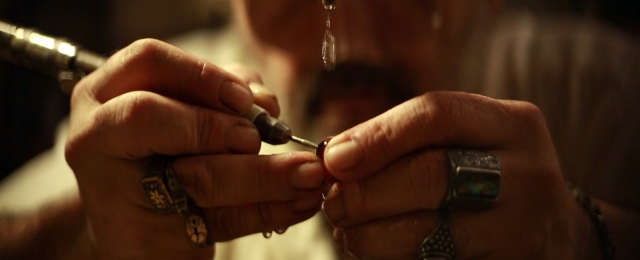
their existence in this geography. Feridun Obul, who began making instruments
all by himself, or Orhan and İdris Savaş brothers, who took up blacksmithing on
a whim, are no different than the Kam mentioned in the myths and legends. Their
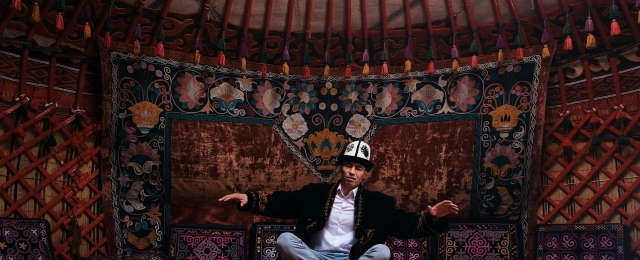
humble and unpredictable characters make them fit to the definition. Mustafa
Selim Kudar and his family, whose purpose is to research and keep this ancient
culture alive, aren’t any less than a Kam who is the keeper of tradition.
Timuçin Çakaloz, whose art reflects the myths of both the old and the new
geographies and who describes himself as Kam, was a personality I thought was a
must-have in the documentary.
As my search for a folk singer and a legend teller to include was ongoing, Beşir
Ahmet Köse and Bilal Anayat came in almost as impossible was personified.
Finding a schooled manaschi, especially in Turkey, was the cornerstone of this
documentary. Over the centuries, the stories Kam told in their rituals became
legends told by legend tellers, taking days of the entirety. A flesh and bone
Kyrgyz manaschi telling these stories in front of us, going in a trance just
like a Kam, was the foundation of the bridge I wanted to convey and explain, the
crossroads of the cultural evolution! I chose not to have a narrator in the
documentary other than the modern-day Kam. For their researcher identities and
for the fact they are using it in their art, I chose Ali Efe and Savaş Çağman to
relay information on the topic. I put Savaş Çağman taking the lead a little due
to his diverse experience, and he gladfully provides the foundation of reference
points for each guest. The artists’ performances in the documentary equal to
more than tens of pages of information and evidence, without which a meaningful
documentary wouldn’t be possible.
Connecting with all the guests and interviewing them during a pandemic proved
challenging, but not as much as trying to simplify a topic as convoluted as this.
In the end, I believe I was able to manage. I think I approached the correct
people regarding the reflections of ancient culture in modern-day Anatolia. I
hope to increase the number of people who see Kam as artists and keepers of
society’s culture instead of witch doctors. I believe Közüngü correctly handles
the inadequate and misunderstood aspects of this field, and presents the
neglected knowledge in a dramatic and concise way.
Just a few days after I wrote this statement, Savaş Çağman unexpectedly passed
away. I find solace in the fact that he got to see the finished documentary, and
gave his blessing. “Közüngü” will carry a greater sentimental value for me and
our crew.