Yapım Tarihi - 2021
Süresi - 00:09:00
Format - Kısa Kurmaca, Renkli, Türkçe
Yönetmen / Director - Ediz Kentkuran
Senarist / Writer - Ediz Kentkuran
Yapımcı / Producer - Ediz Kentkuran
Editing Director - Tayfun Hacıoğlu
Photography Director - Kadir Yücel
Art Director - Yasemin Kurttekinv
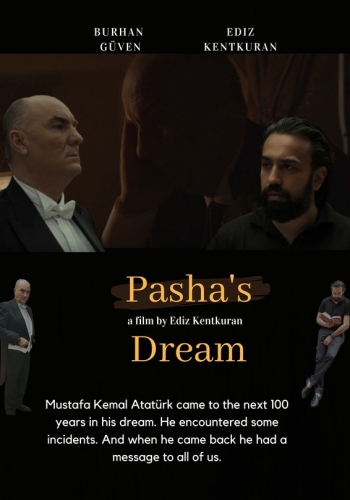
Ana Karakter / Key Cast - Burhan Güven , Ediz kentkuan
Mustafa Kemal Atatürk starts his speech ‘Nutuk’ on October 15, 1927. Many
presidents, ambassadors, deputies and press members from all over the world
listen to his 6 days 36.5 hours lasting speech live. Before his last day of
speech, Atatürk had a dream of 100 years later of Istanbul and in his dream, he
experienced several events. When he wakes up, he tears the speech he prepared
for that day and writes another one. It was his Address to the Youth, as we all
know about. And on October 20, 1927, Atatürk only addresses to the youth and
reads his speech in the face of the whole world listening to him.
In this film, based upon his current perception, I portrayed Mustafa Kemal
Atatürk alone. Throughout the entire movie, we see a lonely and sad Atatürk. -
All the titles from Atatürk’s speech are of events that should particularly be
analyzed well and they have been carefully selected. We can notice that they
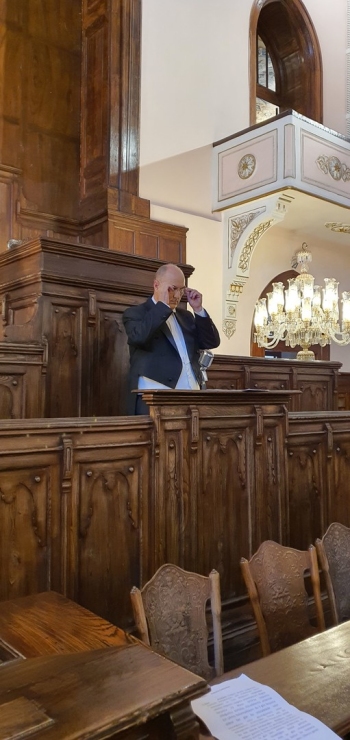
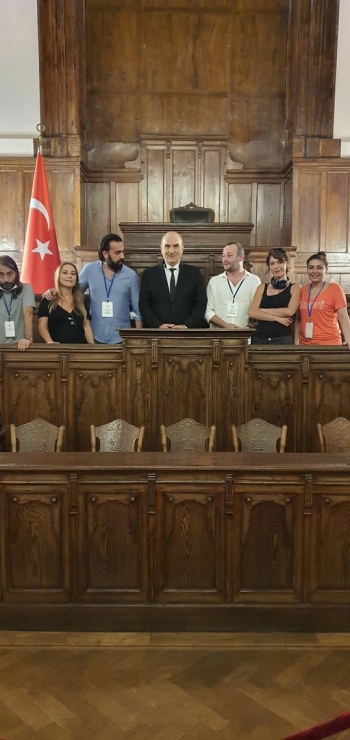
will be in relation to present. - The film has been shot at the original stand
in the original Assembly Hall where he had made this speech. Thereby, we’ve had
a strong artistic side. -While he’s talking, we can see two people behind him;
one of whom has a beard and the other doesn’t; which has been fictionalized for
the image of agreements of two different human models. This is a message showing
that, when it’s all about the state; all conservatives, secularists and those
without religious sensitivity should unite together. That's why I portrayed one
as conservative and the other as secular. -After 100 years, Atatürk wakes up not
at the Republic side of the Taksim Monument. He's in front of the Independence
War side. By this way, I wanted to give a message - This is not a period of
establishing new order or changing the system. We should entirely join hands,
unite together. -He was not someone angry, meanie, or unreachable as it's been
told till now. However, he's determined and intelligent. One can touch him or
talk to him, he walks in the public and despite these he is still different. For
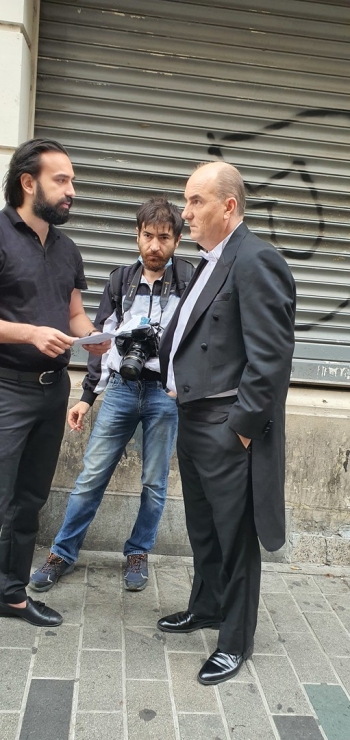
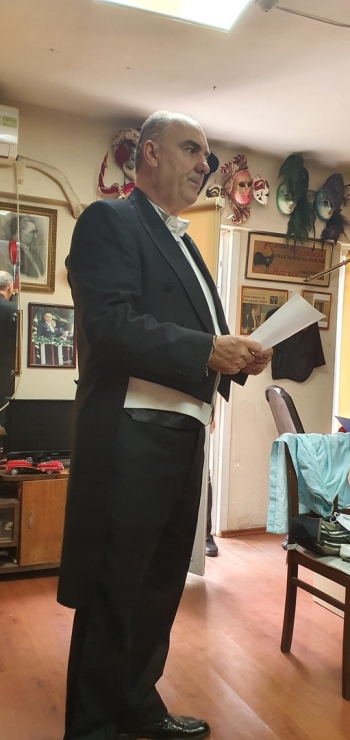
this reason, he walks on the street wearing a tuxedo, a symbol of modernization
for him and an indicator of elegance, dignity and formality even 100 years later,
today. I've aspired to draw attention to Ataturk's style, still maintaining his
stylishness and quality even a hundred year later. -Atatürk talks with children
and people, even he gets angry. He is able to be touched, talked and approached.
This is a new image of Atatürk. Because, Pasha has a profile, been interwined
with his nation, contrary to the image delivered to us. So, I portrayed Atatürk
as touchable. - I made him walk on Istiklal Street in Istanbul for this street
is the symbolisation of the struggle for liberation. At the entrance to Istiklal
Street, he sees the French and European Union flags, and the France Institute
signboard on which Republic of France was written. However he just thinks about
and does not get angry. He doesn't shout out asking what all these are, but just
thinks. Our message here is not to react immediately before understanding the
truth, whatever the matter is. Atatürk is a leader who exactly behaves like that.
- On the newspapers, Atatürk reads that the name Istanbul will be changed. This
scene is a post- modern criticism of me to narrate the alienating Istanbul. It
has been a direct news meaning the name of the city will be changed with the
request of foreigners. - Another news item he reads is about the Assembly being
closed down. Here, I aimed at telling the importance of our Assembly in
connection with the democracy. Other news, as well have been fictionalised in
the same way. -Appointing the German General to the head of the army is a
dedication to Atatürk's war minister's being a German in Dardanelles War.
Ignored the German General, he made attempts that changed the fate of the war.
For this reason, I wanted to remind that sometimes one can make decisions
despite the leading ones. -After reading the items, Atatürk tears the newspapers
and so he indicates us that he does not accept all these. The reason why I added
this scene is to remind our values. -When Atatürk saw the boy reading the book
Nutuk (The Great Speech), he told him to read the last page very carefully. This
is a message that shows Ataturk's struggle in wars together with the community.
When he returns to stop this state of affairs, he writes a letter to the youth
and makes a move not with guns, cruelty or force but with the wisdom, justice,
foresight; together with the nation. -At the end of his speech 'Nutuk', Atatürk
finishes his speech addressing the youth although there were the heads of the
states, the ambassadors, the members of parliament and the press members before
him. However, nobody knows this. In order to emphasize this, I added how he
started his speeches on other days before filming his Address to Youth, -At the
end of the film, the young man opens his eyes and gives the message that the new
youth generation is now aware of Atatürk and his struggle; thanks to his Great
Speech. And that everything will be different from now on. -The film has been
made to draw attention to these values and Atatürk’s speech. The theme used here
is what would happen if Atatürk hadn’t given importance to the youth and hadn’t
addressed to them.